
10 hr
East Jeju UNESCO Heritage & Coastal Wonders
Discover volcanic caves, traditional villages, and dramatic coastal landmarks across eastern Jeju in a single day
Reserve
Hand-picked by our editors — only the best 5 experiences from 47 reviewed.
Verified partners for every tour, free cancellation where available, and instant confirmation on every booking.
10 hr
Discover volcanic caves, traditional villages, and dramatic coastal landmarks across eastern Jeju in a single day
Reserve
9 hr
Explore volcanic craters, coastal villages, and legendary divers in one unforgettable island journey
Reserve
10 hr
Full-day journey through volcanic landscapes, folk villages, and coastal wonders with live cultural show
ReservePrices from verified partners. Availability updates in real time at checkout. Free cancellation policies apply where shown.
The landmarks, rooms, and views travelers on this tour remember — all visible on a single visit.
The summit offers a panoramic view of the volcanic crater formed by hydrovolcanic eruptions. It measures 600 meters in diameter and 90 meters in height.
This area provides a direct look at the sunrise over the ocean. It is the most photographed spot at Seongsan Ilchulbong.
The path consists of 500 wooden steps leading from the base to the top. It is the only way to reach the crater rim.
Various unique volcanic rock shapes line the trail. These structures represent the geological history of the area.
A lower trail allows visitors to see the cliff face from below. It is a more gentle walk compared to the summit climb.
They complement each other; most visitors who do both find Seongsan Ilchulbong more rewarding for its crater rim views while Seopjikoji is better for a relaxed coastal stroll. Planning your jeju island east bus tour tours requires choosing between these distinct landscapes.
| Feature | Top pick Seongsan Ilchulbong | Seopjikoji |
|---|---|---|
Physical intensity |
High (500 steps) | Low (flat coastal paths) |
Visual payoff |
Crater rim and sea views | Oceanfront cliffs and lighthouse |
Time required |
1.5–2 hours | 1–1.5 hours |
Typical crowd levels |
Very high | Moderate |
Best time of day |
04:30–08:00 | Afternoon |
Terrain |
Volcanic tuff cone | Coastal meadow and beach |
| See tickets → |
Verdict: Securing jeju island east bus tour tickets for a guided visit helps maximize efficiency, though independent travelers often favor the sunrise experience at Seongsan Ilchulbong versus the easier, scenic walking routes at Seopjikoji for their jeju island east bus tour tour itinerary.
Choose your ticket, select your date, and reserve in under two minutes. Secure checkout handled by our verified partner.
Instant confirmation by email, with a mobile voucher you can save offline. No printing, no queuing at a collection desk.
Arrive at the entrance, show your voucher on your phone, and walk in. Most tickets include priority or skip-the-line access.
Practical details for your visit straight from our verified partners — hours, access, rules, and how to get there.
284-12 Ilchul-ro
Look for the ticket office near the bus stop
Take bus 101 or 111 from Jeju City to Seongsan
Direct hire from Jeju airport
Wear comfortable walking shoes with good grip, as the 500 steps can be slippery when damp. Light, breathable clothing is recommended for the humid August weather.
There are no lockers at Seongsan Ilchulbong, so carry only essential items. Large luggage is not permitted on the narrow hiking trail.
Tripods are permitted but must not obstruct the flow of visitors on the stairs. Drone use is strictly prohibited without special government authorization.
The path involves 500 steps and is not wheelchair accessible. Visitors with mobility issues can enjoy the free viewing area at the base of the crater.
Mobile phones are permitted for photos and navigation. Please be mindful of other hikers when stopping to take selfies.
The trail is suitable for older children, but parents should monitor them closely on the steep sections. Strollers cannot be used on the ascent.
There is no food allowed on the hiking trail to maintain environmental integrity. Drinking water is available for purchase near the entrance.
Pets are not permitted on the Seongsan Ilchulbong hiking trail. Service animals with proper documentation are exempt.
The 5,000 KRW conservation fee is collected at the entrance. Jeju island east bus tour groups usually allocate 90 minutes for the full climb.
Best time to go, insider tips, nearby landmarks, and the cancellation fine print — flip through to skim what matters to you.
How crowds, weather, and events shift across the year.
March to May features mild temperatures and cherry blossoms. Ideal for trekking the Seongsan Ilchulbong summit.
June to August is hot and humid. Arrive at 04:30 to avoid midday heat.
September to November offers clear skies. Perfect for Jeju island east bus tour itineraries.
December to February is chilly but less crowded. The peak is open for sunrise viewing.
Small details that turn a good visit into a great one.
Arrive at 04:30 to start your ascent before the main wave of tourists. This ensures better photo opportunities at the summit.
Check the forecast as heavy rain may close the path. Always prioritize safety over the itinerary.
There is very little shade on the steps. Wear a hat and use sunscreen even on cloudy days.
Do not wear flip-flops for the climb. The stairs are steep and require proper support.
Bring more water than you think you need. High humidity can lead to rapid dehydration.
Non-bookable sights within a short walk — free to visit, easy to pair.
A scenic coastline area known for its dramatic cliffs. It is a popular spot for coastal walking paths.
Flexible, no hidden fees.
Full refunds are provided for cancellations made at least 24 hours before the scheduled activity. The 5,000 KRW conservation fee is subject to local venue regulations.
Hand-picked options within walking distance — pick a district for vibe, or a specific hotel for convenience.
Modern hotel focusing on social spaces and local culture. Ideal for young travelers on a Jeju island east bus tour.
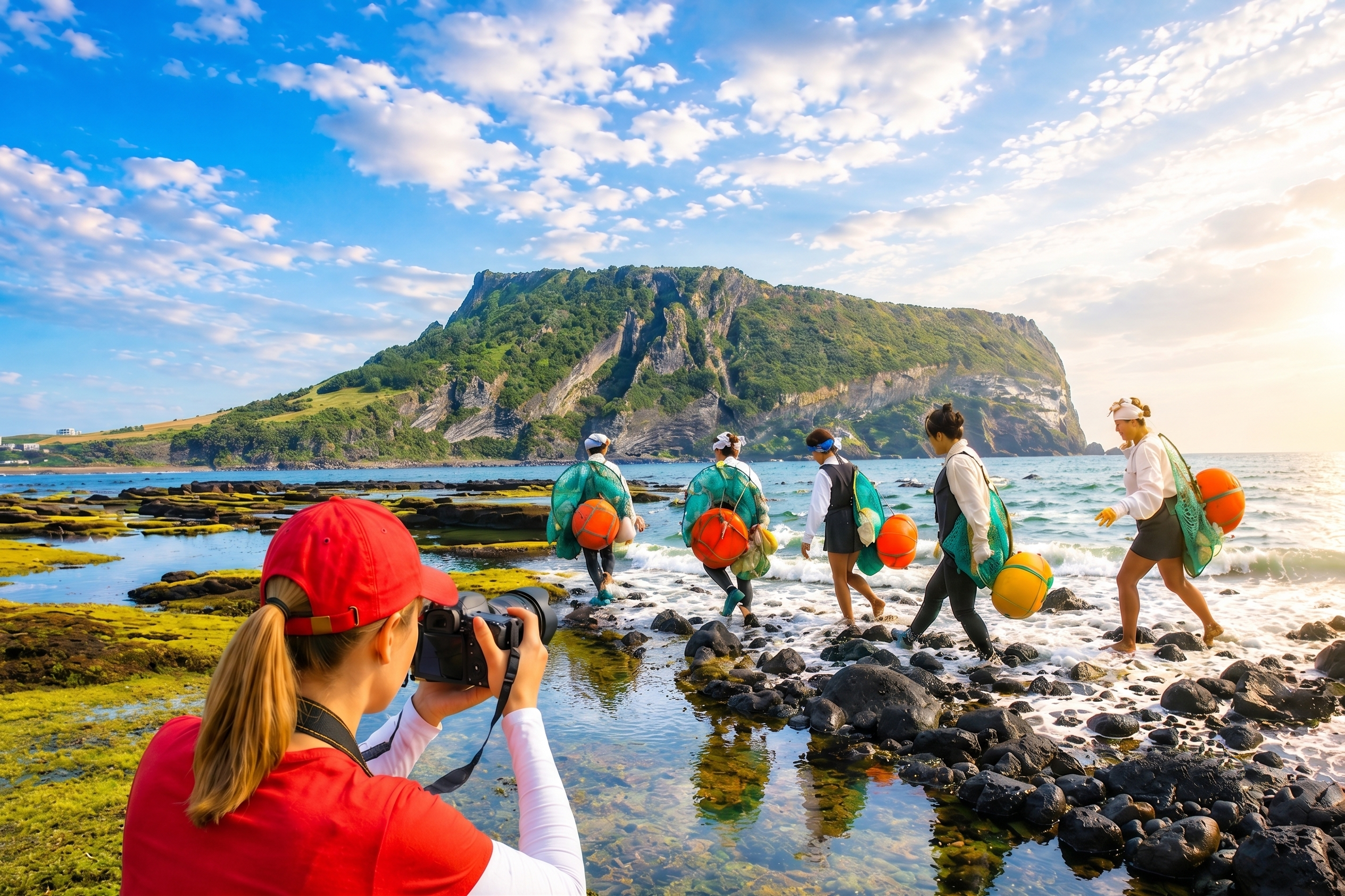
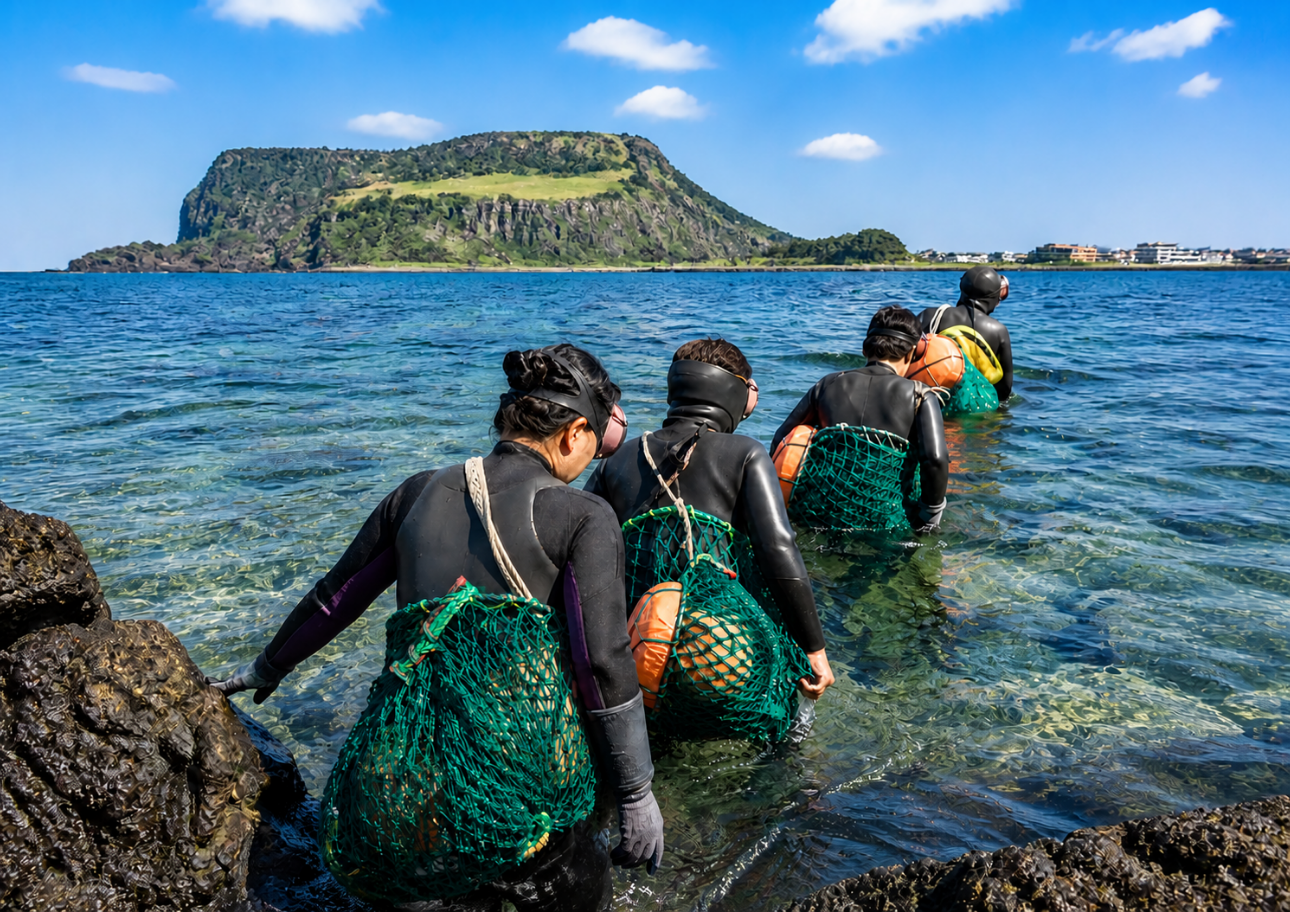
Seongsan Ilchulbong rises 182 meters from the sea, a tuff cone born 5,000 years ago when magma met shallow water and exploded upward in a column of steam and ash. The crater's 600-meter diameter bowl, lined with ninety exposed strata, records every phase of the eruption in bands of red oxidized scoria and black basalt. UNESCO inscribed it in 2007 not for age — Jeju holds older volcanoes — but for textbook preservation: few hydrovolcanic cones worldwide retain such clear internal structure after millennia of wind and wave. Today the eastern shore of Jeju remains the island's quietest quadrant, bypassed by the resort corridor that dominates the north and south coasts. A jeju island east bus tour traces the arc from Seongsan through fishing hamlets where haenyeo free-divers, now averaging seventy years old, still work the shallows for abalone and sea urchin. The 500-step ascent to Ilchulbong's rim takes twenty minutes at a steady pace; the conservation fee of 5,000 KRW funds trail maintenance and erosion control on the friable tuff. From the summit, the view east catches Udo Island's peanut fields and basalt cliffs, while the western panorama sweeps back toward Halla Mountain's shield profile. The route typically includes Seongeup Folk Village, a walled Joseon-era settlement where thatched roofs still cover family compounds built from porous volcanic stone, and Gwangchigi Beach, a black-sand crescent where lava met the Pacific and fractured into fine grains. Some itineraries add Manjanggul Lava Tube, a 7.4-kilometer cave system formed when the outer crust of a basalt flow solidified while molten rock continued beneath, carving tunnels tall enough to swallow a three-story building. The public section extends one kilometer and remains at 11°C year-round. Jeju island east bus tour tours depart from central Jeju City or Seogwipo, condensing what would require a rental car and six hours of self-navigation into a narrated loop. Operators favor early starts to reach Ilchulbong by first light, when the crater rim catches horizontal sun and the offshore rocks cast long shadows across the sea. By mid-morning, when independent travelers arrive, the eastern heritage tour has typically moved inland to stone walls and tangerine orchards.
"Few hydrovolcanic cones worldwide retain such clear internal structure after millennia of wind and wave."
A step-by-step walkthrough of the visit — what you'll see, how long each stage takes, and the details that matter.
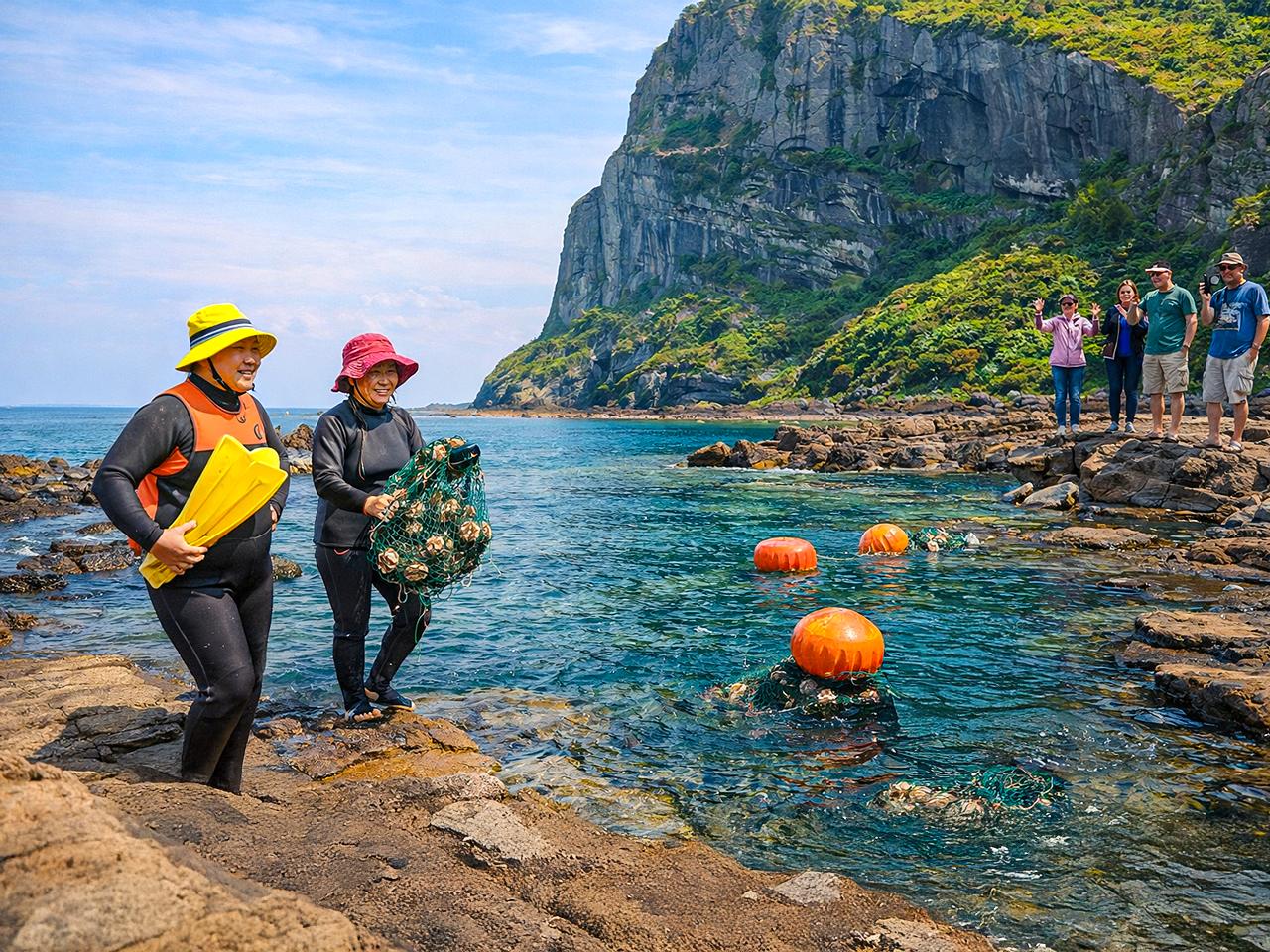
You meet your group before dawn near Dongmun Market, the bus pulling out under streetlights as Jeju City empties behind you. The road hugs the coast, passing dark fields and greenhouses before the first glow touches the horizon. At Seongsan, you step onto volcanic gravel and begin the climb, the wooden boardwalk switching back across tufted grass and露scoria outcrops. Five hundred steps later, the crater's interior bowl opens below you — a terraced amphitheater of stone and wind-bent shrubs, the far rim catching pink light. After the descent, the bus continues to Seongeup, where black lava-block walls frame courtyards and a guide explains the notched gatepost system that once signaled whether the family was home. You walk narrow lanes between thatched roofs, the stone porous enough that moss grows in every crevice. At a haenyeo museum or performance site, you watch elderly women in black wetsuits demonstrate the whistle-breath technique used after surfacing from ten-meter dives, their faces creased by decades of saltwater and sun. The final stop is often a lava tube or coastal overlook, the air cool and damp inside the cave, the basalt ceiling rippled where molten rock once flowed. By noon you're back on the highway, the eastern shore's craters and villages compressed into a single morning's transit, each site framed and narrated, the logistics solved.
The site is open daily from 04:30–20:00. Please plan your schedule according to these hours.
The entrance fee is 5,000 KRW per person as a conservation fee. This applies to all visitors accessing the landmark.
There are 500 steps to reach the summit of Seongsan Ilchulbong. The path is well-maintained but steep.
The best arrival window is 04:30–08:00 to witness the sunrise and beat the crowds. Early arrival is key for a successful experience.
Large bags are not permitted, so please carry only light items. There is no storage for luggage at the entrance.
Yes, photography is allowed and encouraged at Seongsan Ilchulbong. Please respect other visitors while setting up your shots.
No, the path involves 500 steps and is not suitable for strollers. Use a carrier for young children.
You can purchase tickets on-site at the entrance gate. It is best to arrive early to ensure you get through efficiently.
Yes, many travelers combine their visit with nearby landmarks like Seopjikoji or Gwangchigi Beach during their trip.