
10 hr
East Jeju UNESCO Heritage Day Tour
Discover volcanic caves, coastal peaks, and traditional culture across eastern Jeju's top UNESCO sites
Reserve
Hand-picked by our editors — only the best 5 experiences from 12 reviewed.
Verified partners for every tour, free cancellation where available, and instant confirmation on every booking.
10 hr
Discover volcanic caves, coastal peaks, and traditional culture across eastern Jeju's top UNESCO sites
Reserve
9 hr
Experience Jeju's iconic volcanic landscapes, coastal beauty, and living traditions in a single comprehensive day trip.
Reserve
10 hr
Full-day exploration of volcanic wonders, coastal cliffs, and traditional culture across Jeju's eastern treasures
ReservePrices from verified partners. Availability updates in real time at checkout. Free cancellation policies apply where shown.
The landmarks, rooms, and views travelers on this tour remember — all visible on a single visit.
The massive tuff cone crater measures 600 meters in diameter. It is one of the most prominent volcanic features in Korea.
The path consists of 500 steps that lead to the summit. It provides a consistent workout for all fitness levels.
The vertical cliffs show distinct geological layers formed by volcanic activity. These cliffs tower over the East China Sea.
The peak is known as the Sunrise Peak for its position facing the east. It is the premier spot for morning photography on the island.
The rock formations reveal thousands of years of sedimentation. Geologists study these layers to understand the island history.
They complement each other, but most visitors who do both find the crater climb more physically demanding while the lava tube offers a cooler, subterranean experience for their jeju island east unesco day tour tours.
| Feature | Top pick Seongsan Ilchulbong | Manjanggul Cave |
|---|---|---|
Terrain type |
Steep volcanic trail | Uneven lava tunnel floor |
Physical exertion level |
High impact hike | Low impact walking |
Indoor vs Outdoor |
Outdoor summit trail | Indoor lava tube |
Primary visual draw |
Crater rim and sunrise | Lava columns and stalactites |
Recommended visit duration |
1.5–2 hours | 1 hour |
| See tickets → |
Verdict: Choose Seongsan Ilchulbong if you prioritize panoramic ocean views, or select Manjanggul Cave for these jeju island east unesco day tour tickets if you prefer exploring geological structures in a shaded environment.
Choose your ticket, select your date, and reserve in under two minutes. Secure checkout handled by our verified partner.
Instant confirmation by email, with a mobile voucher you can save offline. No printing, no queuing at a collection desk.
Arrive at the entrance, show your voucher on your phone, and walk in. Most tickets include priority or skip-the-line access.
Practical details for your visit straight from our verified partners — hours, access, rules, and how to get there.
284-12 Ilchul-ro
Primary entry point for visitors
Take the intercity bus to Seongsan-ri stop. A short walk leads to the main entrance.
Follow coastal road 1132 to the east. Parking is free at the large on-site lot.
Wear comfortable walking shoes suitable for the 500-step ascent. Light, breathable clothing is recommended for the humid summer climate.
There are no lockers at this volcanic site. Keep personal items lightweight as you will be climbing the stairs to the summit.
Photography is permitted throughout the trail. Capture the sunrise from the crater rim or panoramic coastal views.
The trail to the summit involves 500 steps and is not wheelchair accessible. A flat, paved trail at the base is available for visitors with limited mobility.
Cell phone usage is permitted. Signal remains strong throughout most of the hiking path.
The site is family-friendly, though strollers are not suitable for the crater rim ascent. Children should be monitored closely on the steep path.
No food or drink is sold on the trail. Carry sufficient water to remain hydrated during your jeju island east unesco day tour.
Pets are prohibited on the trail to protect the local environment. Service animals may be permitted with valid documentation.
As a UNESCO World Heritage site, the preservation of the landscape is paramount. Please adhere to marked paths at all times.
Best time to go, insider tips, nearby landmarks, and the cancellation fine print — flip through to skim what matters to you.
How crowds, weather, and events shift across the year.
March to May features blooming canola flowers surrounding the peak. Expect mild temperatures and moderate crowds.
June to August is hot and humid with peak sunlight. The 04:30 opening allows for comfortable sunrise treks.
September to November offers clear skies and pleasant hiking weather. The cooling temperatures make mid-day visits more manageable.
December to February is chilly but less crowded. The peak is open, but check for occasional wind closures.
Small details that turn a good visit into a great one.
Reach the site at 04:30 for the best light. This avoids the heat and peak tour bus crowds.
Wear shoes with good grip. The 500 steps can be slippery when damp.
Keep your ticket receipt handy. The 5,000 KRW conservation fee covers entry and site maintenance.
There is limited shade on the climb. Use sunscreen and a hat during summer months.
Check the return bus times before heading up. The transit schedule varies by season.
If you cannot manage the 500 steps, walk the lower coastal path for ocean views. It provides a different perspective of the volcanic geography.
Non-bookable sights within a short walk — free to visit, easy to pair.
A scenic headland with dramatic coastal cliffs. It is popular for its lighthouse and walking paths.
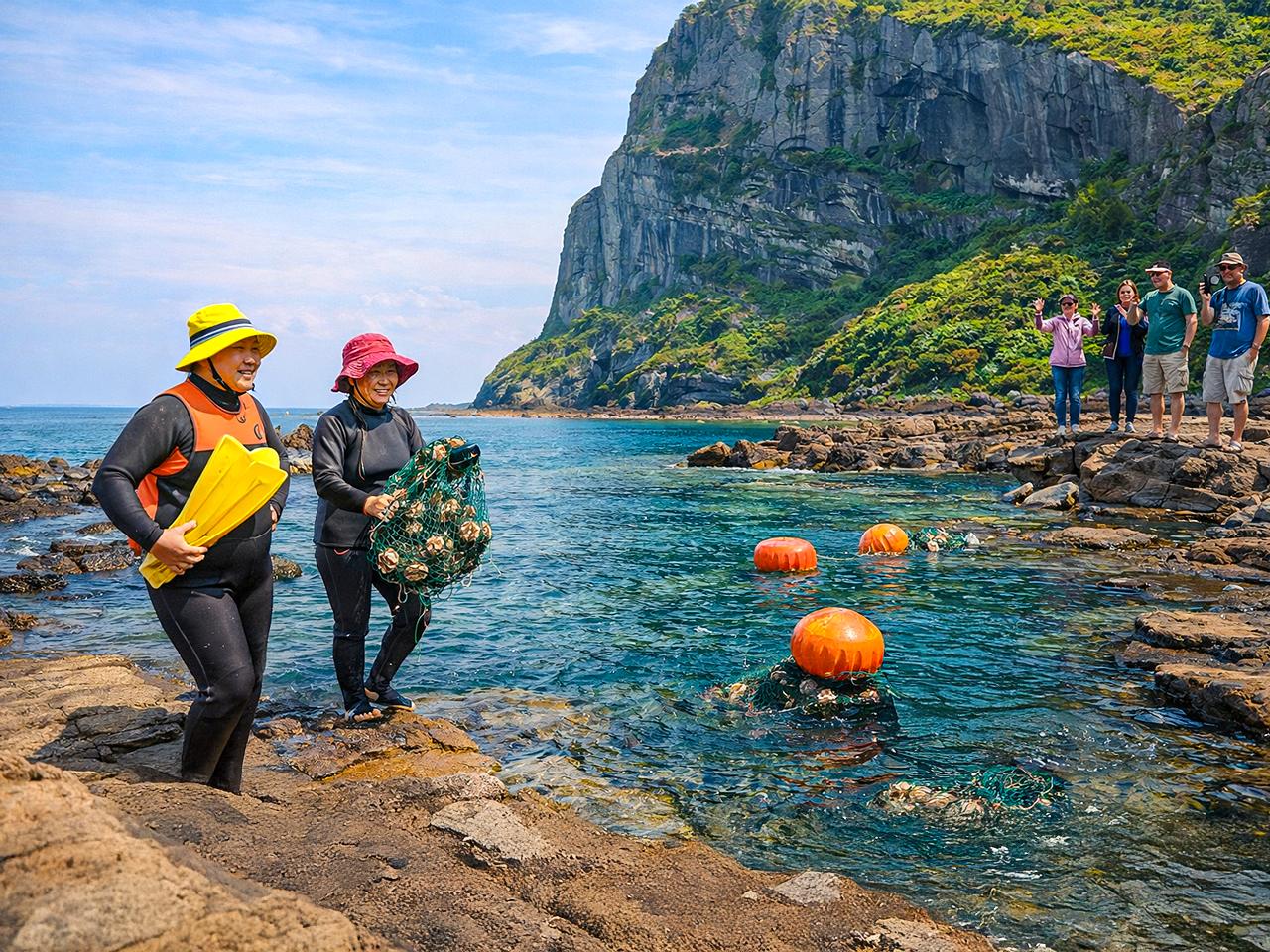
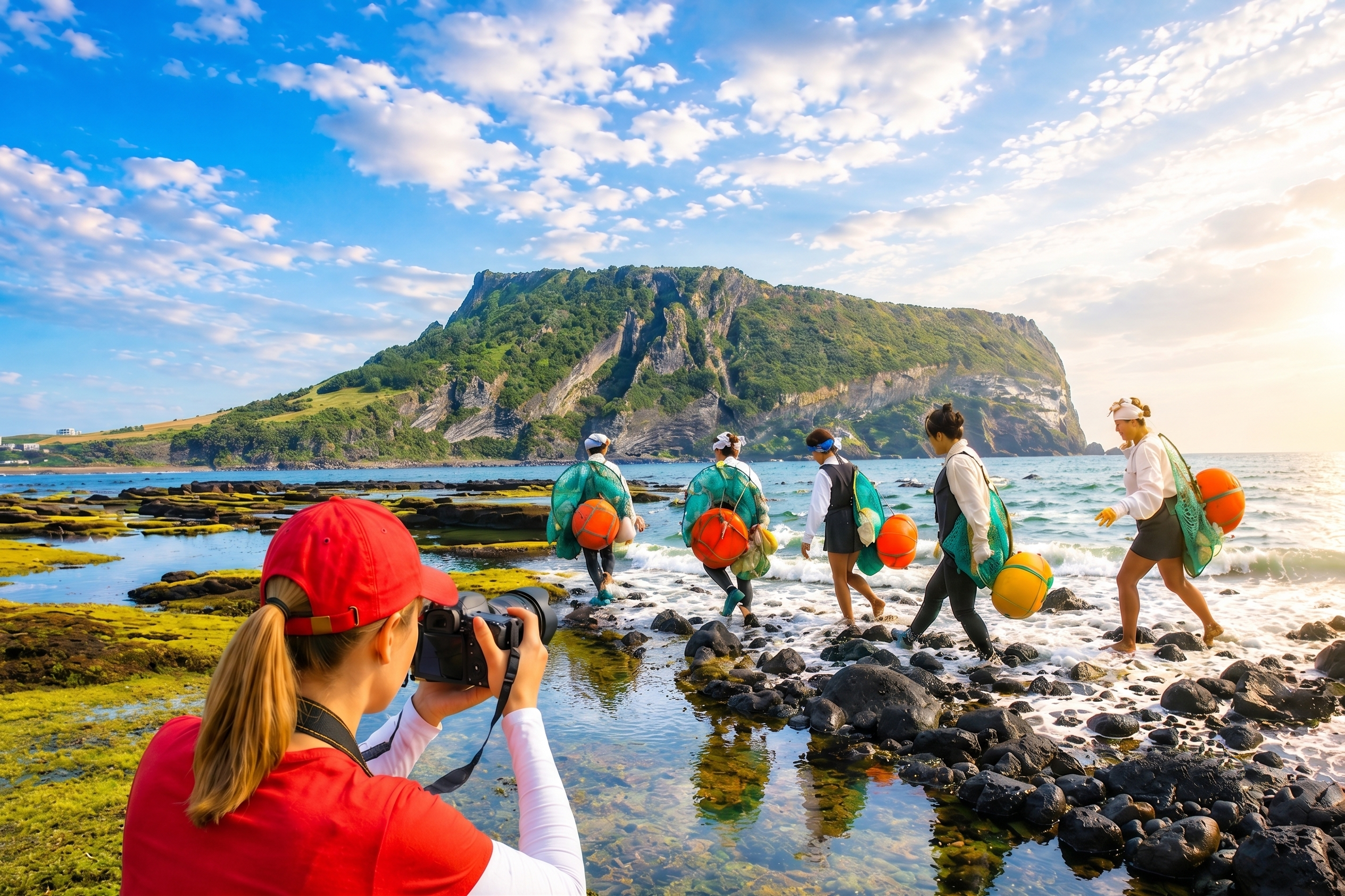
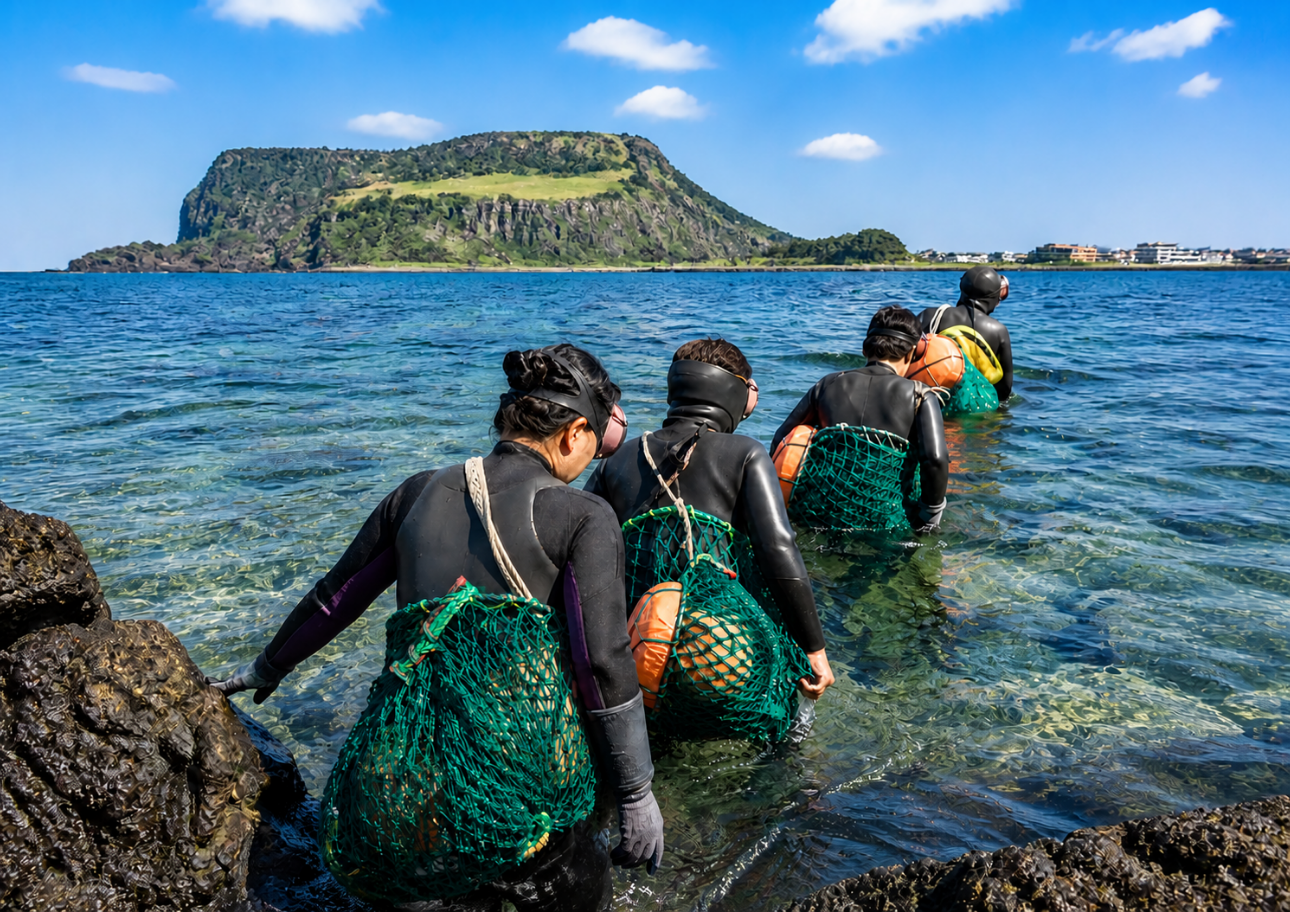
Learn about the traditional female divers of Jeju. Demonstrations take place at the shoreline.
Gateway for short boat trips to the nearby island. Ferries run throughout the day.
Flexible, no hidden fees.
Entry fees are non-refundable once processed. The 5,000 KRW conservation fee per adult is a standard site requirement.
Hand-picked options within walking distance — pick a district for vibe, or a specific hotel for convenience.
Modern rooms near the coast.
Convenient access to the trailhead.
Seongsan Ilchulbong rose from the seafloor 5,000 years ago in a single hydro-volcanic explosion, its ash and lapilli fusing into a tuff cone that now towers 182 meters above the eastern shore of Jeju. The crater's bowl measures 600 meters in diameter, ringed by 99 sharp rock peaks that medieval Korean mapmakers likened to a fortress crown. UNESCO inscribed the site in 2007 as part of Jeju Volcanic Island and Lava Tubes, recognizing it as a textbook example of Surtseyan eruption morphology — where magma met shallow seawater and detonated into steam-driven plumes that built a crater in hours, not millennia. Today the Jeju Island East UNESCO Day Tour anchors a circuit that pairs geological drama with living maritime heritage. The crater's eastern flank drops into pasture where Jeju ponies graze on slopes too steep for tractors, while the western rim overlooks Ojo-ri village and the narrow channel where haenyeo free-divers — women aged 60 to 85 — descend without tanks to harvest sea urchins and abalone from basalt reefs. The diving tradition, itself a UNESCO Intangible Cultural Heritage entry as of 2016, has no parallel outside Jeju and coastal Korea; tourists on the Jeju Island East UNESCO Day Tour tours watch scheduled performances where divers surface with catch nets and emit the distinctive sumbisori whistle, a respiratory technique that prevents hyperventilation. The 500-step ascent to the crater rim takes 25 minutes at a steady pace, threading through wind-pruned silvergrass and past informational plaques that explain columnar jointing and palagonite tuff. Sunrise arrivals — the site opens at 04:30 — reach the summit as light spills over the East Sea, igniting the crater's interior grasslands in amber and throwing the 99 peaks into silhouette. By mid-morning, tour coaches arrive in waves from Jeju City, 90 minutes west, and the path becomes a single-file queue. The conservation fee of 5,000 KRW per adult funds trail maintenance and erosion control; wooden boardwalks now protect the crater's fragile turf from the 1.8 million annual visitors who make Seongsan Ilchulbong the island's second-most-visited natural site after Hallasan. Eastern Jeju UNESCO heritage tour itineraries typically bundle the crater with Seongeup Folk Village, a preserved Joseon-era settlement of thatched-roof homes built from black basalt, and Manjanggul, a 13-kilometer lava tube where a 7.6-meter stone pillar formed from dripping ceiling magma. The route traces the island's volcanic backbone, a narrative written in scoria cones, parasitic craters, and columnar basalt cliffs that fracture the coastline into coves.
"The crater's bowl measures 600 meters in diameter, ringed by 99 sharp rock peaks that medieval Korean mapmakers likened to a fortress crown."
A step-by-step walkthrough of the visit — what you'll see, how long each stage takes, and the details that matter.
You arrive at the Seongsan Ilchulbong ticket pavilion by 04:45, securing a 5,000 KRW conservation pass before the sunrise crowd. The trailhead begins at sea level, a gentle ramp that steepens into stone steps as you climb the cone's western flank. At step 200 you pause at the first overlook: Ojo-ri's fishing harbor spreads below, its breakwater lit by a string of yellow lamps, and beyond it the black outline of Udo Island floats on the pre-dawn sea. The final 150 steps switchback through silvergrass, and at 05:20 you reach the crater rim just as the sun breaks the horizon. The interior bowl glows green, its grass floor 90 meters below the summit ridge, and you trace the circuit path counterclockwise to the eastern viewpoint where the East Sea stretches unbroken to the curve of the planet. A haenyeo diver surfaces near the rocks, her orange buoy bobbing in the swell, and you hear the sharp exhale of her sumbisori whistle carried on the offshore breeze. By 06:00 you descend the northern route, a faster track that delivers you to the shoreline in 15 minutes. At the village edge, a scheduled haenyeo performance begins at 06:30: three divers in black wetsuits wade into the shallows, free-dive for two minutes, and return with sea urchins split open on the rocks. You board the tour coach at 07:00, the cone now backlit and golden, and the road east toward Seongeup Folk Village unrolls through fields of green barley.
The site is open daily from 04:30–20:00. This applies to all days of the week.
The conservation fee is 5,000 KRW per adult. This fee provides access to the trail.
Yes, the path to the crater rim consists of 500 steps. Please pace yourself during the ascent.
There are no lockers at Seongsan Ilchulbong. Plan to carry only essential items during your walk.
The best arrival window is 04:30–19:00. Arriving at 04:30 allows you to reach the summit in time for sunrise.
You may bring water, but please carry all trash out. Food is generally discouraged to protect the natural environment.
The ascent to the crater rim is not stroller accessible due to the 500 steps. A lower, paved path is better for families with small children.
Yes, the 5,000 KRW conservation fee is mandatory for all visitors. It supports the preservation of this UNESCO site.
Many operators offer a jeju island east unesco day tour. Please refer to our live booking grid for available options.
Yes, you can easily combine your visit with a trip to Seopjikoji or the Udo Island ferry terminal.